iPhone Duo Skills
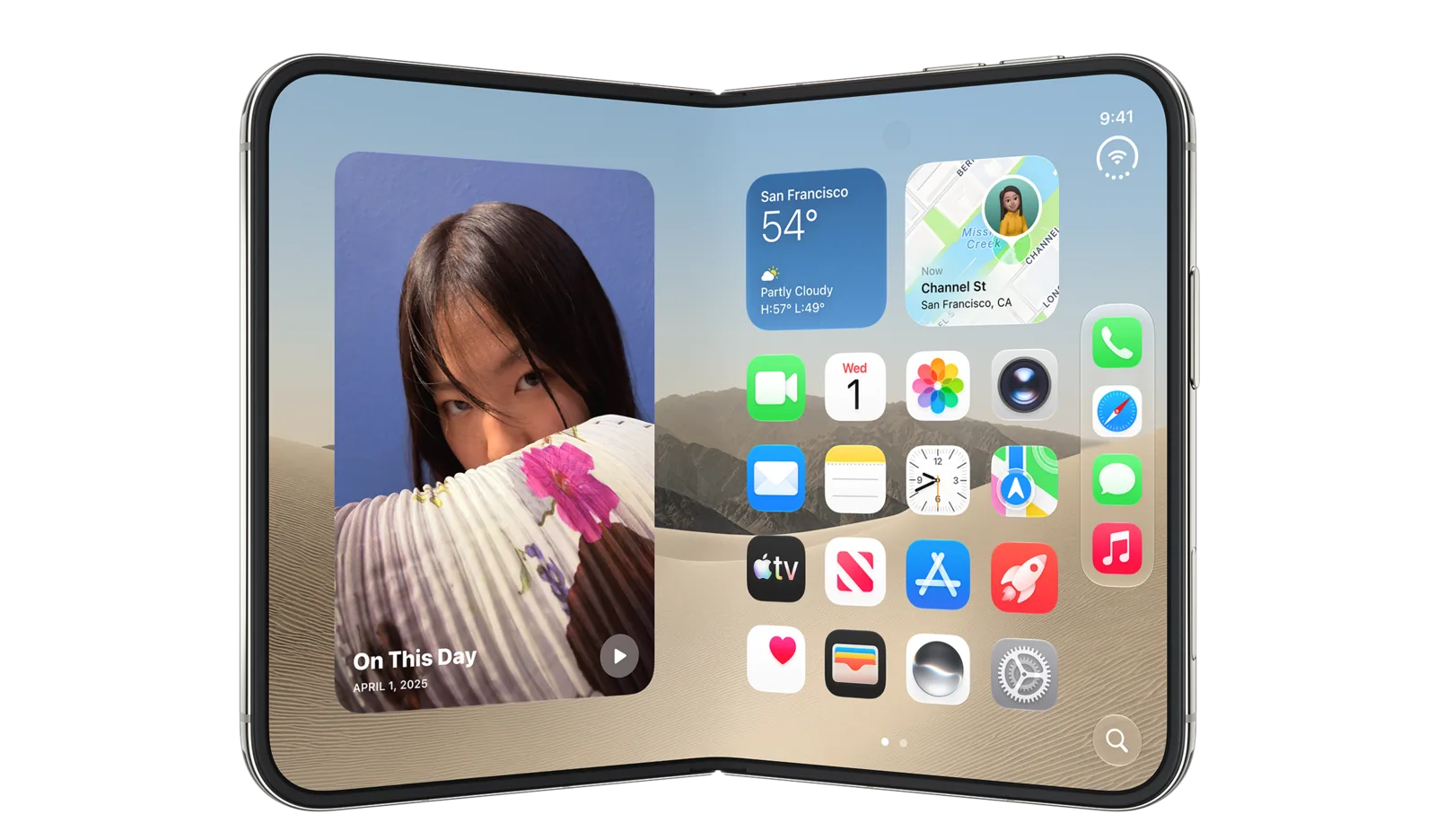
Image © Apple Inc., from the iPhone Duo developer page, used for identification. Not affiliated with or endorsed by Apple.
Agent skills for building iOS apps on iPhone Duo — Apple's first foldable iPhone, announced September 9, 2026.
Apple's developer material for iPhone Duo is six Tech Talk videos plus the Designing for iPhone Duo HIG page. Xcode 27.1 and the Preparing your app for iPhone Duo article are still listed as coming. These skills distill what exists into structured guidance an agent can act on, plus reference sheets for device facts and the full API surface.
Install
npx skills add mirzaaghazadeh/iphone-duo-skills
Installs all nine. The CLI detects your agent — Claude Code, Cursor, Copilot, Gemini and others — and puts them where that agent looks.
Useful flags:
# just one skill
npx skills add mirzaaghazadeh/iphone-duo-skills --skill iphone-duo-readiness

# user-level instead of project-level
npx skills add mirzaaghazadeh/iphone-duo-skills --global

# see what's in here without installing
npx skills add mirzaaghazadeh/iphone-duo-skills --list
To try a skill without installing it at all:
npx skills use mirzaaghazadeh/iphone-duo-skills@iphone-duo-readiness
git clone https://github.com/mirzaaghazadeh/iphone-duo-skills.git
cp -r iphone-duo-skills/skills/* ~/.claude/skills/
Or project-level, into .claude/skills/ in a repo.
Each skill is a self-contained SKILL.md with YAML frontmatter, so it also works
anywhere that reads plain Markdown instructions. Restart the session and the
skills appear; invoke one by name or just describe the task.
The skills
| Skill | Works with | Use it when |
|---|---|---|
| iphone-duo-readiness | SwiftUI · UIKit | Entry point. Auditing or porting an existing app — SDK tiers, fixed-assumption hunting, safe areas, routing to the rest. |
| iphone-duo-adaptive-layout | SwiftUI · UIKit | Content lands in the fold. Reserved regions, division vs occlusion, displacement patterns, ArrangementView. |
| iphone-duo-vertical-bars | SwiftUI · UIKit | Toolbars and tab bars. The vertical axis, symbol vs text, AxisBehavior, overflow and visibility priority. |
| iphone-duo-hinge-and-scenes | SwiftUI · UIKit | Hinge-driven effects, Split View, multiple scenes, dual-display UI via scene accessories. |
| iphone-duo-camera | AVFoundation · AVKit | Capture apps. Virtual front camera vs individual cameras, direction coordinator, mirroring, preview. |
| iphone-duo-design-review | Any framework | Design critique rather than code — poses, side controls, asymmetry, fold avoidance, sheets. |
| iphone-duo-games | Unity · Unreal · Godot · SpriteKit · Metal | The project is a game. Filling the screen across poses, aspect ratio vs letterboxing, touch controls clear of the fold. |
| iphone-duo-flutter | Flutter · Dart | The app is Flutter. What MediaQuery gives you, why displayFeatures doesn't work here, bridging via platform channels. |
| iphone-duo-react-native | React Native · Expo | The app is React Native. Asymmetric insets, resize handling, bridging via a native module. |
Which skills apply to your stack
Native iOS — SwiftUI or UIKit. Start with iphone-duo-readiness, which routes
you to the rest. The five Swift-focused skills name real iOS 27.1 APIs you can
call directly; iphone-duo-design-review applies whatever you build in.
Flutter. Read iphone-duo-flutter first, then iphone-duo-design-review —
the design guidance is framework-neutral and applies unchanged. Skim
iphone-duo-adaptive-layout for the reasoning behind reserved regions and
displacement; the concepts transfer even though the code doesn't.
React Native or Expo. Same shape: iphone-duo-react-native, then
iphone-duo-design-review, then iphone-duo-adaptive-layout for background.
Any framework, if you capture photo or video. iphone-duo-camera matters
regardless of stack, because the two front cameras and the "which way is this
camera facing" problem are AVFoundation-level facts. Cross-platform apps hit them
through whatever camera plugin they use, or through their own bridge.
Games — Unity, Unreal, Godot, SpriteKit, Metal. Read iphone-duo-games. Games
sidestep most of the UI guidance but not resizing, and the fold is a genuine
hazard for on-screen touch controls.
Kotlin Multiplatform, .NET MAUI, Capacitor and friends. No dedicated skill,
but the pattern from the Flutter and React Native skills carries over directly:
everything is either resize and safe-area handling you can do in your existing
layer, or a native bridge to the iOS 27.1 APIs. Read whichever cross-platform
skill is closer to your setup, plus iphone-duo-design-review.
Cross-platform reality check. Neither Flutter nor React Native supports iPhone Duo yet. Flutter's
MediaQuery.displayFeaturesis documented as populated only on Android, so it returns an empty list here; React Native has no fold API at all. Both skills split what works today from what needs a native bridge, so you don't lose an afternoon hunting for an API that isn't there.
Reference
reference/device-facts.md— displays, silicon, cameras, poses, and the size-class tablereference/api-index.md— every announced API by job, with framework and minimum SDKreference/sources.md— every source, linked
What actually matters on this device
If you read nothing else:
iPhone Duo is not a new idiom — it's a wider continuum of sizes. Every bug in a foldable port comes from an app asserting something fixed (this idiom, this orientation, this screen, this width, this symmetric inset), and every fix replaces that assertion with a question about the space available right now.
Diagram by this project. The underlying behavior is documented across Apple's
iPhone Duo Tech Talks and
Designing for iPhone Duo;
see reference/sources.md.
Three concrete consequences:
- The inner display ignores your supported interface orientations. Branch on size class, never on orientation or idiom.
UIScreen.mainis ambiguous here and slated for deprecation. Use the environment, the trait collection, or the scene's bounds.- Safe areas are asymmetric. Any math shaped like
width - safeAreaInsets.left * 2is a defect.
And the highest-leverage single change: build against the iOS 27.1 SDK. It's the gate for edge-to-edge content, vertical bars, reserved regions and arrangements.
Accuracy
Every technical claim traces to Apple's Tech Talks, the Designing for iPhone Duo HIG page, or the Newsroom announcement. Nothing is invented — but most of these APIs were announced while Xcode 27.1 was still rolling out, so treat the names as the shape of the API and confirm exact signatures against the SDK headers before relying on a build.
A handful of toolbar API names are now confirmed by the published HIG;
reference/api-index.md marks which ones.
scripts/fetch-transcripts.py re-fetches the Tech Talk transcripts from the
WebVTT subtitle track in each video's HLS manifest, which is how this repo was
researched. Re-run it when Xcode 27.1 ships and the pending documentation lands.
License
MIT — see LICENSE.
Not affiliated with or endorsed by Apple. "iPhone" and "iPhone Duo" are trademarks of Apple Inc.