pfc-mcp




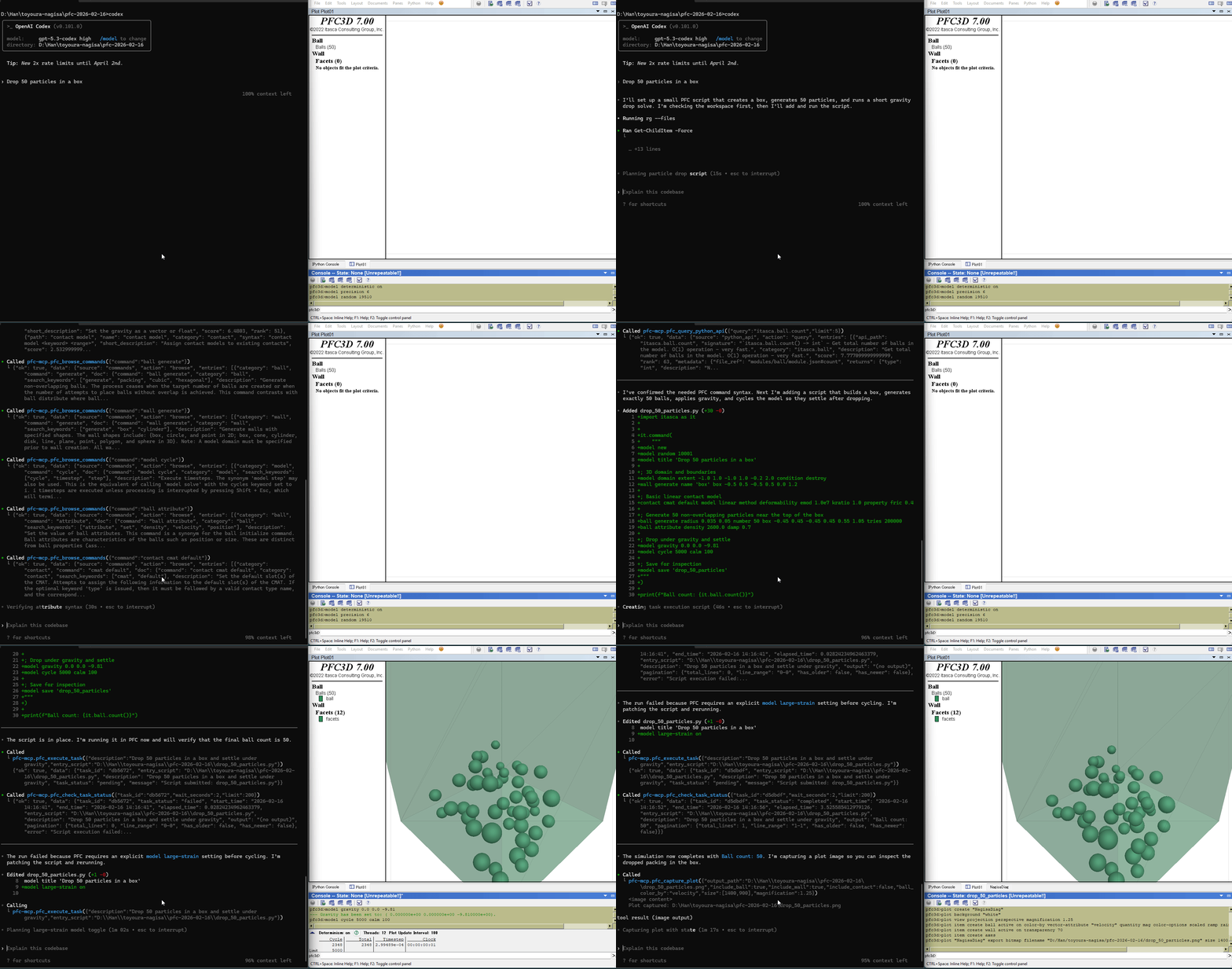
pfc3d>model new ;now, with LLM.
pfc-mcp connects AI agents to ITASCA PFC — Itasca's discrete element method (DEM) code — through the Model Context Protocol. Browse documentation, run simulations, and execute code, all through natural conversation.
pfc3d>model solve ;LLM solves.
Tools (10)
5 documentation tools — browse and search PFC commands, Python API, and reference docs. No bridge required.
5 execution tools — interactive REPL, task submission, progress monitoring, interruption, and history. Requires bridge.
First-time Setup
Prerequisites
- ITASCA PFC 6.0, 7.0, or 9.0 installed
- uv installed (for
uvx)
Agentic Setup (Recommended)
Copy this to your AI agent and let it self-configure:
Fetch and follow this bootstrap guide end-to-end:
https://raw.githubusercontent.com/yusong652/pfc-mcp/main/docs/agentic/pfc-mcp-bootstrap.md
Manual Setup
1. Register the MCP server in your client config:
{
  "mcpServers": {
    "pfc-mcp": {
      "command": "uvx",
      "args": ["pfc-mcp"]
    }
  }
}
2. Start the bridge from inside PFC:
Download addon.py, then use either of these two flows inside PFC:
- Copy the file contents into the PFC IPython console and run them
- Or download the file and execute it in PFC GUI
Verify
Restart your AI agent (Claude Code, Codex CLI, Gemini CLI, etc.) and ask it to call pfc_execute_code to verify the connection.
Daily Startup
Once first-time setup is done, each new PFC session only needs the bridge re-started — run this in PFC's IPython console and you're back online:
import itasca_mcp_bridge
itasca_mcp_bridge.start()
start() checks PyPI for a newer bridge release and self-upgrades before starting. The MCP client config persists.
Features
- Multi-version PFC support - command docs for PFC 6.0, 7.0, and 9.0 via the
versionparameter - Hierarchical documentation browsing - agents navigate the PFC command tree to discover capabilities and boundaries, reducing hallucinated commands
- Enhanced plot documentation - plot items reference docs supplementing the official documentation
- Interactive REPL - rapid iteration before committing to full scripts; agents can quickly test and refine code
- Task lifecycle management - submit long-running simulations, monitor progress, interrupt running tasks, and browse task history
- Multi-client compatible - works with Claude Code, Codex CLI, Gemini CLI, GitHub Copilot CLI, OpenCode, toyoura-nagisa, and other MCP clients
Troubleshooting
See Troubleshooting in the bootstrap guide.
Development
See Developer Guide: Install and Run from Source.
Contributing
PRs and issues are welcome! See the Developer Guide to get started.
License
MIT - see LICENSE.