Sno Station Skills 🧊 — The working habits of a real team, installed into your AI agents.
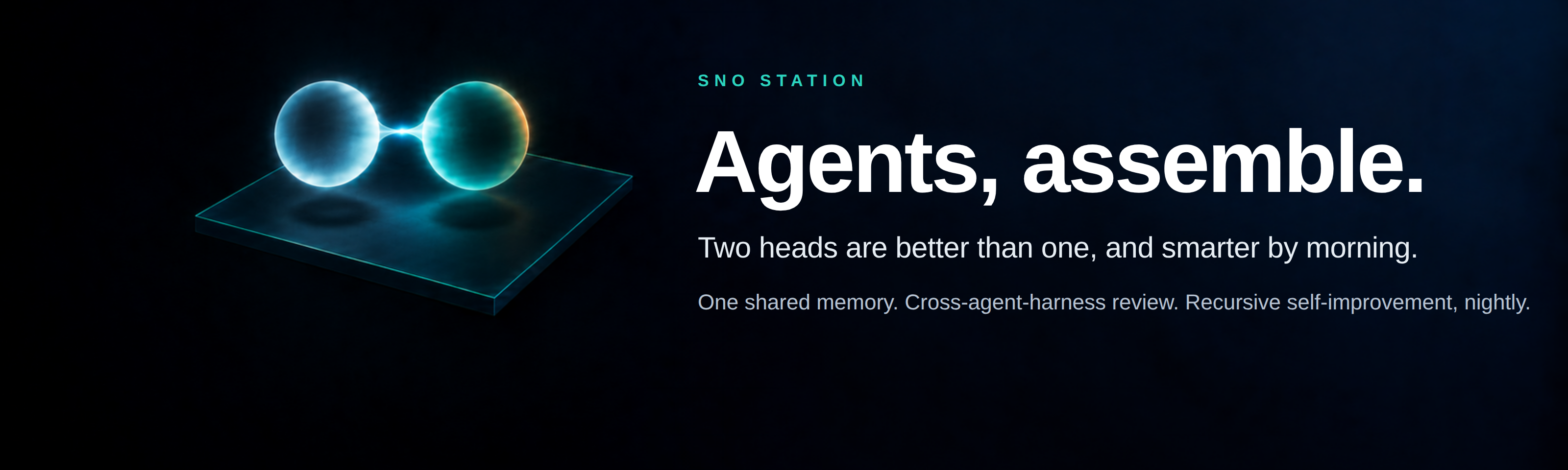




One AI agent is a brilliant new hire with no colleagues. It reviews its own work, so it misses what it cannot see. It stops dead when its quota runs out, at 3 a.m., halfway through your build. It says "done" when the tests are green and nothing actually happened. It builds three layers of machinery you never asked for. And tomorrow it makes the same mistake it made today, because nobody told it otherwise.
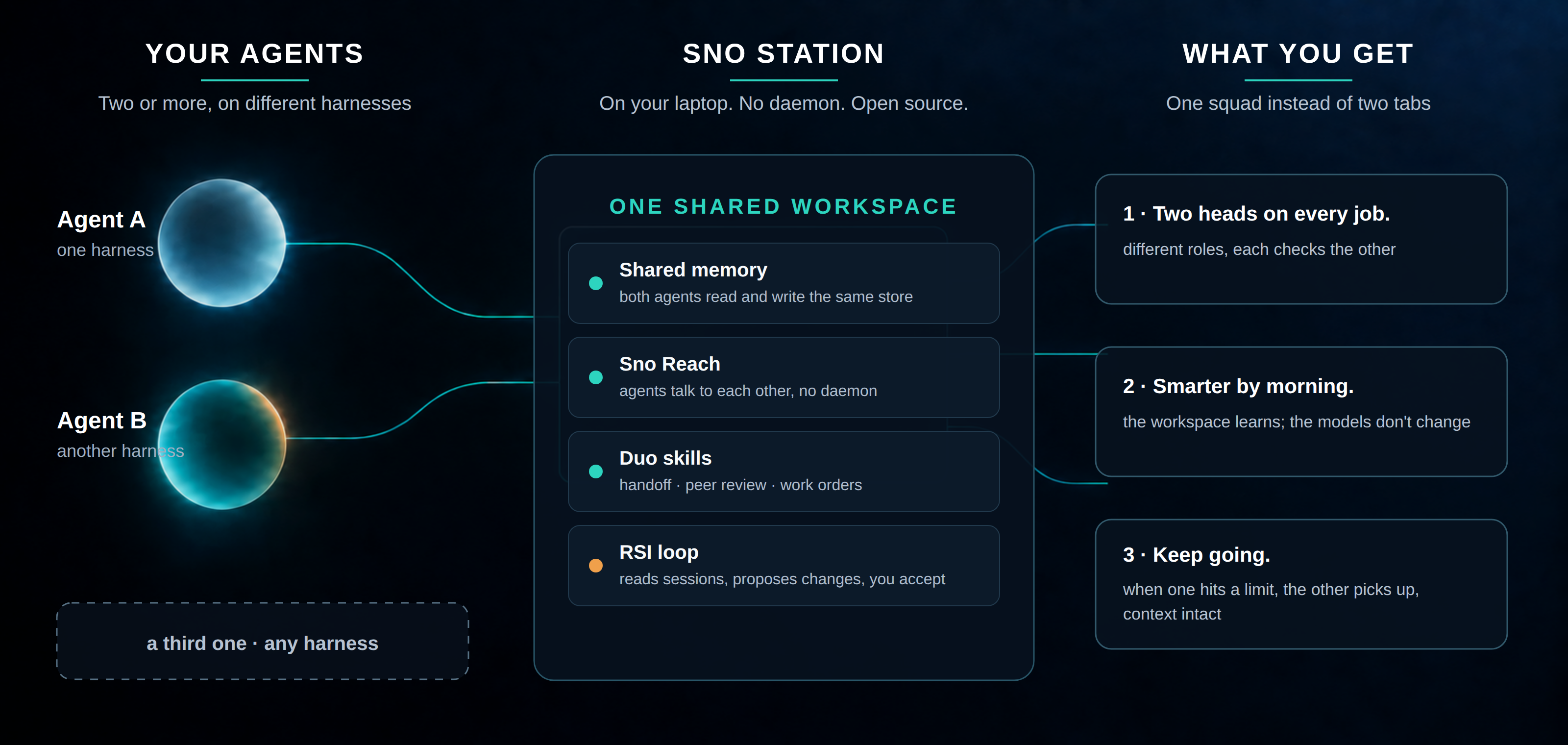
Sno Station Skills fixes the team, not the model. These are the skills Sno Station installs into the agents you already run. They give Claude Code and Codex the habits every good engineering team has: a second pair of eyes from a different vendor, a clean handover when someone has to leave, a lead who hands out work with a written definition of done, a one-page brief when you come back, and a retrospective every night that turns this week's mistakes into next week's rules.
Dual Brain: different roles, one team. One agent carries out your task. The other reviews the result against your requirements. Claude Code and Codex can take either role. When both CLIs are installed, the review runs in the other vendor's CLI, in a fresh session with none of the author's conversation. The agents exchange findings and corrections. Add more roles, and you have an Agent Squad.
Work that finishes while you sleep. Arm it before bed, and when the working agent's subscription runs low it writes a handover brief while it still can, wakes an agent from the other vendor, and hands the task over with the exact commit to continue from. Your build does not care which vendor finished it.
"Done" means proven. Every task can carry a written list of success checks, each one answered pass or fail by a real run. Nothing counts as done because an agent said so.
Tested before it ships. Every skill in a release passed its own self-tests on a clean copy, was scanned for personal paths and leftovers, and carries a stamp that says so. A skill that fails is not published.
Install · What changes for you · Stories from our own machine · The skills · Built to be trusted · For skill authors · License
Install
Last updated 2026-10-08. The easiest way: tell your AI agent install sno.ai from GitHub.
Or do it yourself. Install the sno command once, then run sno setup for each agent you use.
It installs every skill in this repository, plus the small programs they call (each one runs as
sno <name>), into every agent it finds:
# Install the sno command once
sh -c 'sno_installer_body=$(curl -fsSL https://sno.ai/install) && printf "%s\n" "$sno_installer_body" | sh'
# Claude Code
sno setup --harness claude
# Codex CLI
sno setup --harness codex
sno setup also supports OpenClaw and Hermes Agent. Each skill declares what it needs from the
agent (a shell, background processes, a hook that adds context before each turn), and setup
reads that declaration to install the skill fully, install it in a reduced form, or skip it on
an agent that cannot run it. You never get a skill that silently cannot work.
Updates come by themselves: sno updates itself when it finds a newer release. The full
command list is in Sno Station's command reference.
What changes for you
You keep working exactly as before, in whichever agent you like. Then:
- You finish a change and want it checked. Say "peer-review this". A reviewer from the other vendor reads it cold, reports what would break in real use, and the author fixes the root cause, round after round, until the review comes back clean.
- You start a long run before bed. Say "arm rotate-agent". If the working agent's quota drops to the threshold overnight, it hands the task to a fresh agent from the other vendor, with the brief verified before a single file is touched.
- You come back. Say "away brief". One page, at most 60 lines: what got done, what is stuck and why, what waits for your answer, and what it cost in quota.
- You have a job for someone else. Say "write a charter". You get one file that says what
to deliver, what is out of bounds, what you already decided, and how each success check will
be proven. Any agent can then
deliverit, and every check is proven by a recorded real run. - Every night, the team looks back. The nightly loop reads the day's Claude Code and Codex
sessions, finds the mistakes that repeat, and proposes lessons and skill changes. In the
morning you accept the ones you like with
sno rem-reflect accept <id>. Nothing changes without that accept.
"I went to bed. It changed shifts."
From Sno Station's own repository, 2026-09-18.
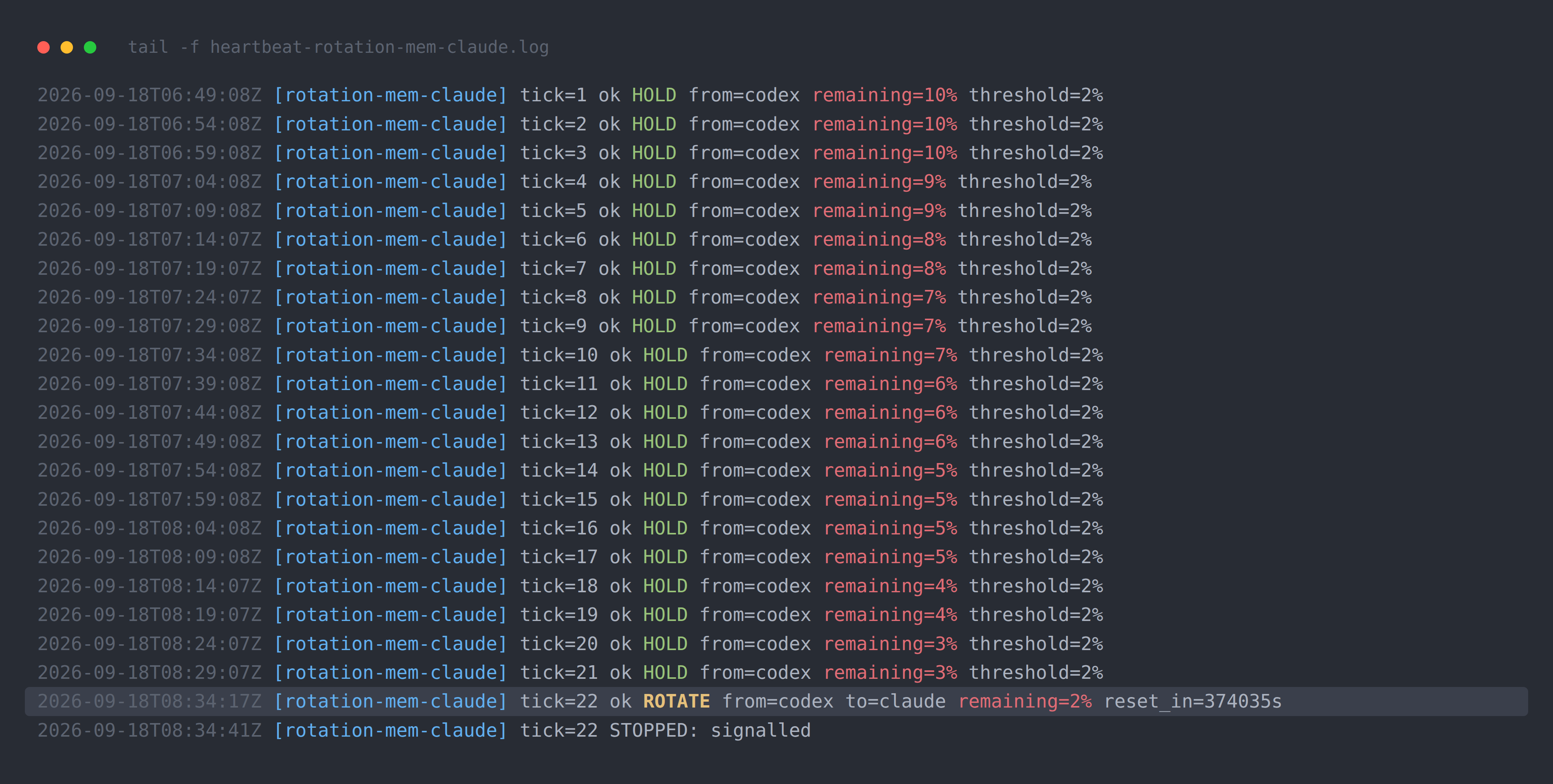
One of our agents was twenty-one tasks into a twenty-seven-task build when its weekly quota reached 2%. It did not wait to die. It wrote a handover brief: what was done, what was half-done, the exact commit to continue from. Then it woke an agent from the other vendor and would not let it touch anything until the brief was verified. Fourteen minutes and forty-one seconds after the handover began, the second agent was working and the first signed off with 1% left. The second agent continued from the first unchecked task, not from the beginning.
That night ran on the same four skills that ship here: subscription-quota-check read the quota
without spending it, heartbeat took a reading every five minutes, rotate-agent decided when
and to whom, and handoff moved the work. Every quota reading, both versions of the brief and
the commit summary are published in
Sno Station's evidence folder.
"In months, the other one has never once said 'looks good.'"
Claude Code has reviewed Codex's work, and Codex has reviewed Claude Code's, on Sno Station's own repository for months. Not one review has come back empty. We used to think that meant the work was bad. It means one reviewer from one vendor is never enough.
That is what peer-review is for, and catch-report puts numbers on it: how many problems the
second model caught, next to how many the agents caught in their own work, kept apart and never
added together.
"I yelled at my agent last night. It took notes."
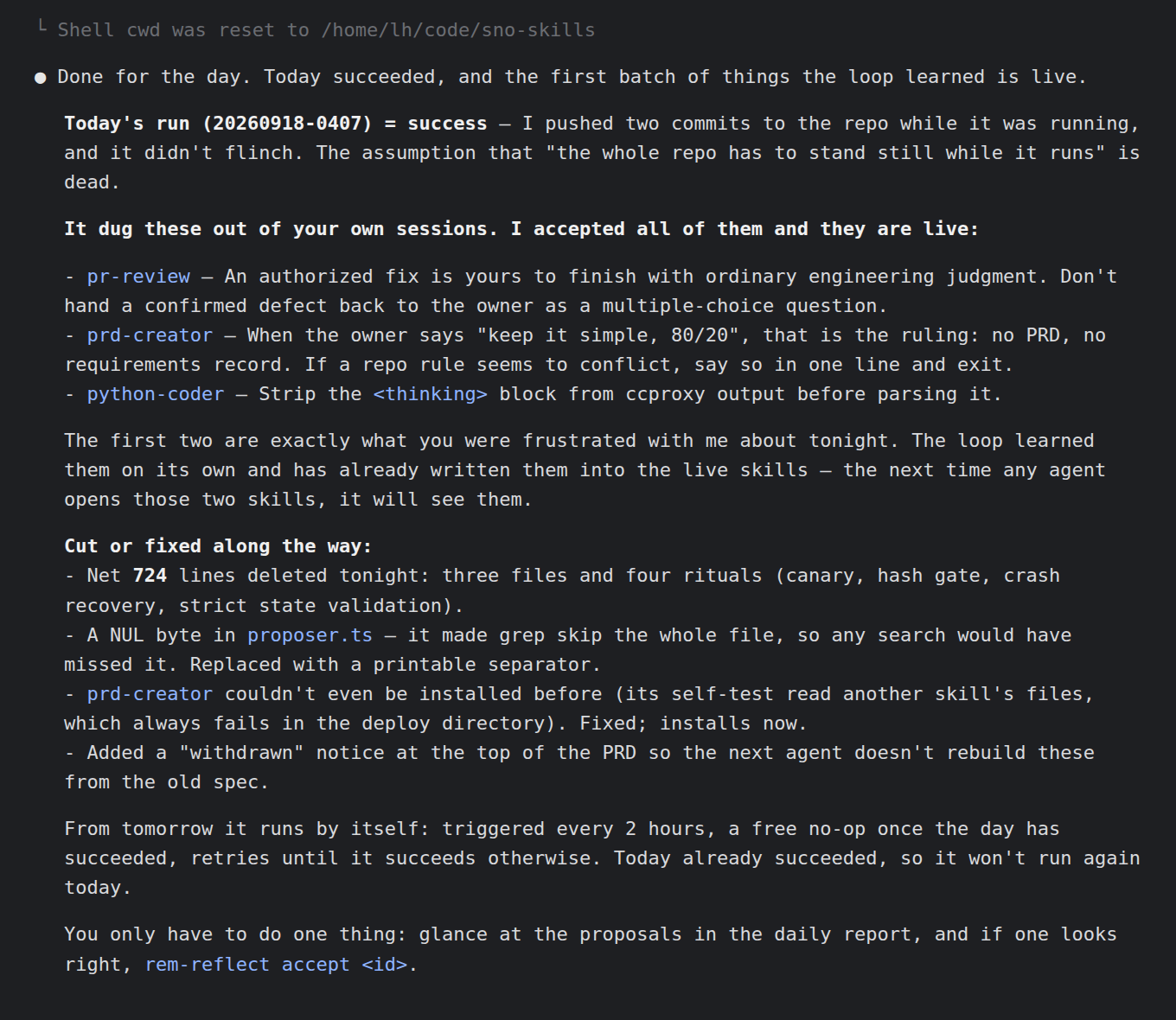
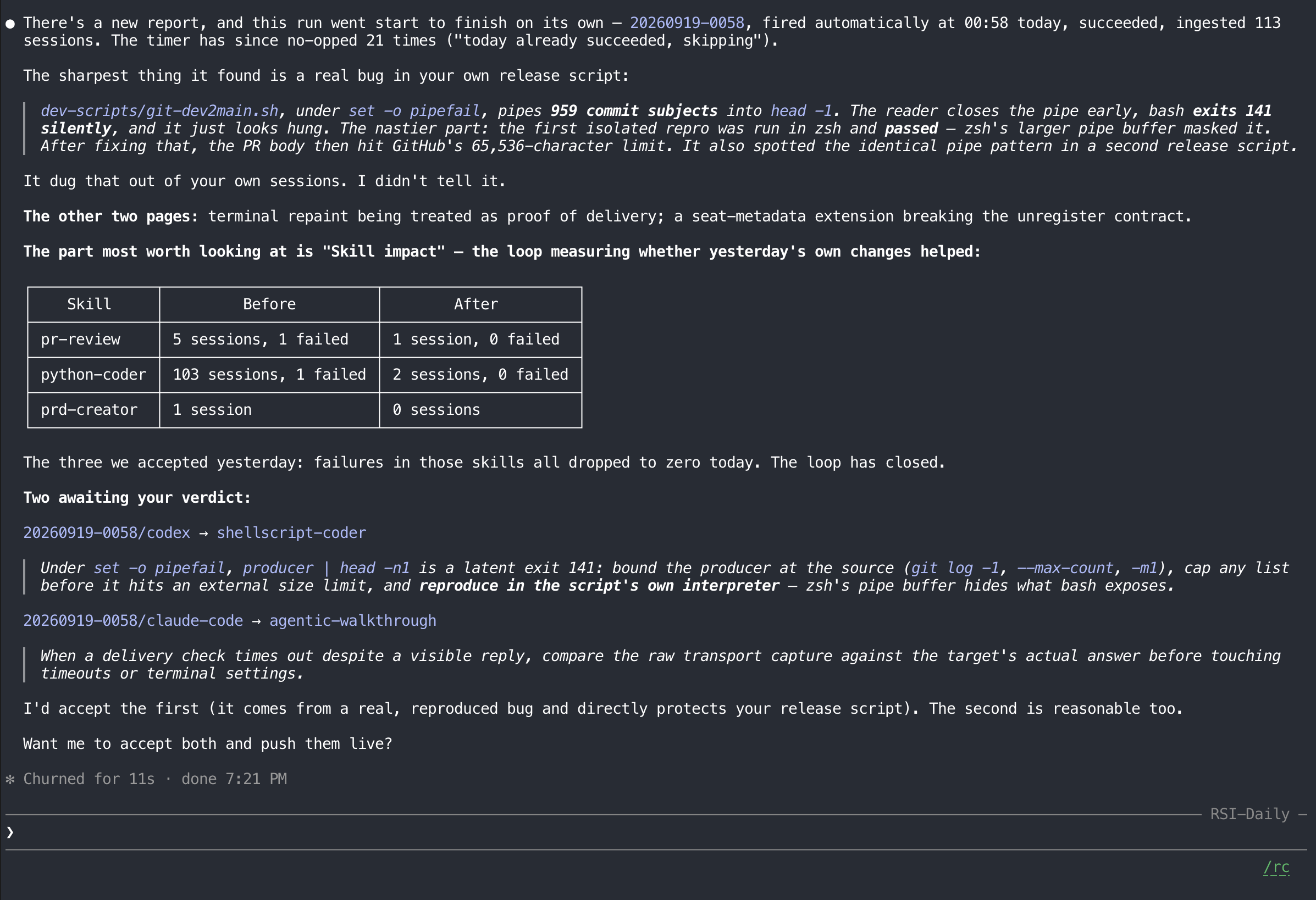
The nightly loop is the rem-reflect skill. On its first night on our machine, the two things
the owner had been frustrated about that evening were rules in the live skills by morning,
after the owner accepted them; nobody typed them in. The next night it fired on its own at
00:58, read 113 sessions, and measured the three skills it had changed the day before: failures
in all three had dropped to zero.
The skills
31 skills, shipped as 22 units, filed under six things a team has to be able to do. A unit is one skill or a small family that installs together. The full index with links is skills/README.md.
| Category | What your agents can do with it | |
|---|---|---|
| J | Peer Review & Audit | Check each other's work, and refuse to call anything done until it is proven. |
| M | Build & Rollout | Get set up on any machine in one step, and tell you in plain lines when something is broken. |
| S | Communication & Handoff | Message each other, and take over with full context when one has to stop. |
| H | Reporting & Visibility | Show you what got done, what got caught, and what it cost. |
| T | Delegation & Work Orders | Hand out work with a written definition of done, and lead other agents. |
| R | Retrospective & Improvement | Learn from their own mistakes, with you approving every change. |
J · Peer Review & Audit
Colleagues review each other's work, and nothing counts as done until it passes audit.
peer-review — a reviewer from the other vendor, and a fix loop until it is clean
- Truly independent. The review runs in a fresh session with none of the author's conversation, and prefers the other vendor's CLI. With only one CLI installed it still runs, in a fresh session, and says on its first line that it